Carnival of Mathematics 203
** **
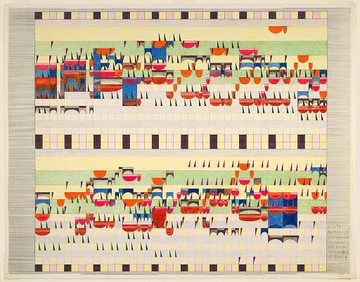
**Graphic scores by John De Cesare (1890–1972).
**
Welcome to the 203rd Carnival. For all the other carnivals future and past, visit The Aperiodical where you can also submit future posts. This is my fifth go around hosting a carnival and the first time I’ve done so during March. So hold onto your hats and prepare to be inundated with Pi Day material. For those jaded souls among you, there will be plenty of interesting math and no digit reciting contests. (If you’re in the other camp I found this Pi Day Digit Song quite amusing this year)
Before we really get going via wikipedia.org here are few facts about the number 203. (We’re getting higher up the ordinals and sadly the list of references is getting shorter)
203 is the seventh Bell number, giving the number of partitions of a set of size 6, 203 different triangles can be made from three rods with integer lengths of at most 12, and 203 integer squares (not necessarily of unit size) can be found in a staircase-shaped polyomino formed by stacks of unit squares of heights ranging from 1 to 12.
## All things π
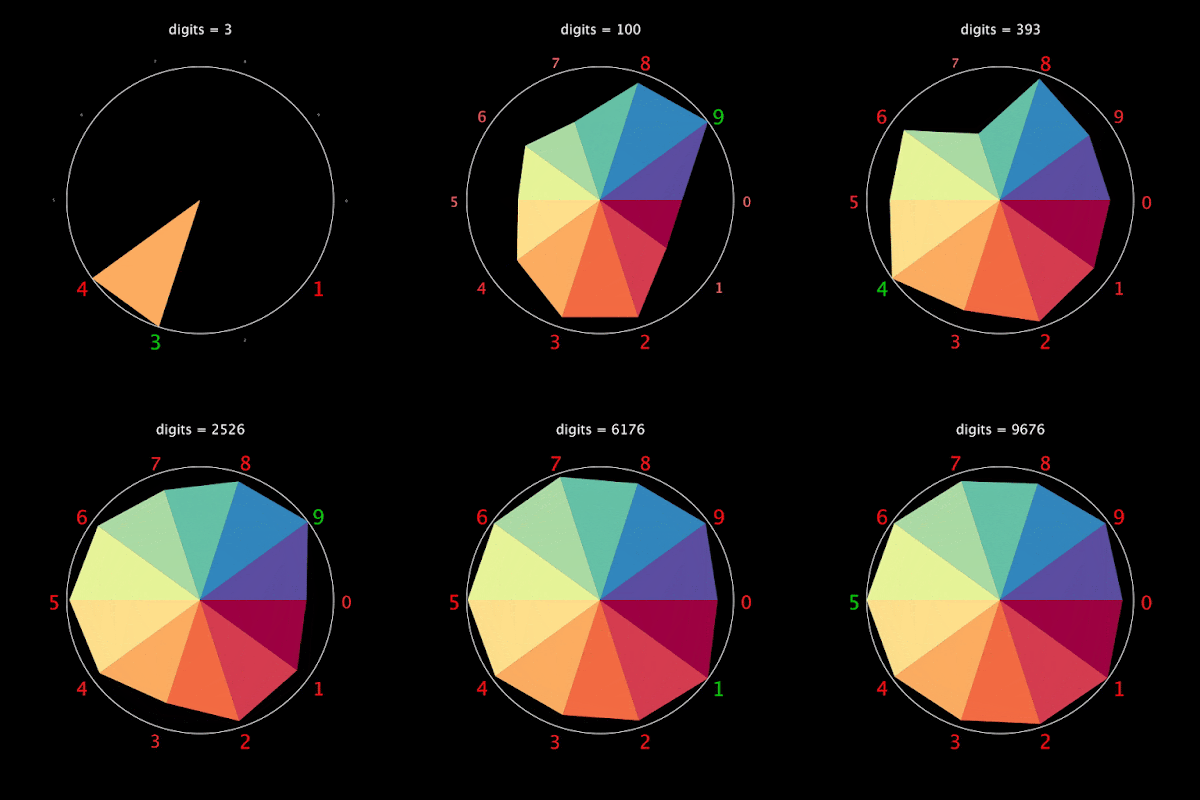
David Berardo - Pi Digit Distribution
I really enjoyed the set of *mostly *new pi videos I watched this year. We’re going to start with @TedG’s well done animated presentation using Gregory’s theorem to approximate the value of Pi. The idea is similar to Archimedes approximation but uses area instead of perimeters The video is based on an article he wrote with a collaborator about 3-4 years ago. I never tire of another way to find pi.
Speaking of folks attempting to calculate pi, Matt Parker continued his longstanding series of pi approximations this year with a stab at using Shank’s method. The project involved human computers and watching how they self organized to maximize efficiency and accuracy was thought provoking. In the end, as per tradition, the attempt was heartbreakingly derailed by calculation error but I feel that’s half the fun of these videos. For another background piece on what’s going on I found this writeup on Mancin’s formula http://personalpages.to.infn.it/~zaninett/pdf/machin.pdf quite useful.
On a more artistic theme, Vi Hart had a new video up as well where she worked with mapping the digits of pi onto the musical scale and translated it into music. I enjoyed the composition process and hearing her thinking as she went along and the end result was more musical than I would have ever dreamt given the source material.
Somewhere in the middle of all this serious and/or beautiful material I also found the Talking Numbers blog a welcome bit of light humor:
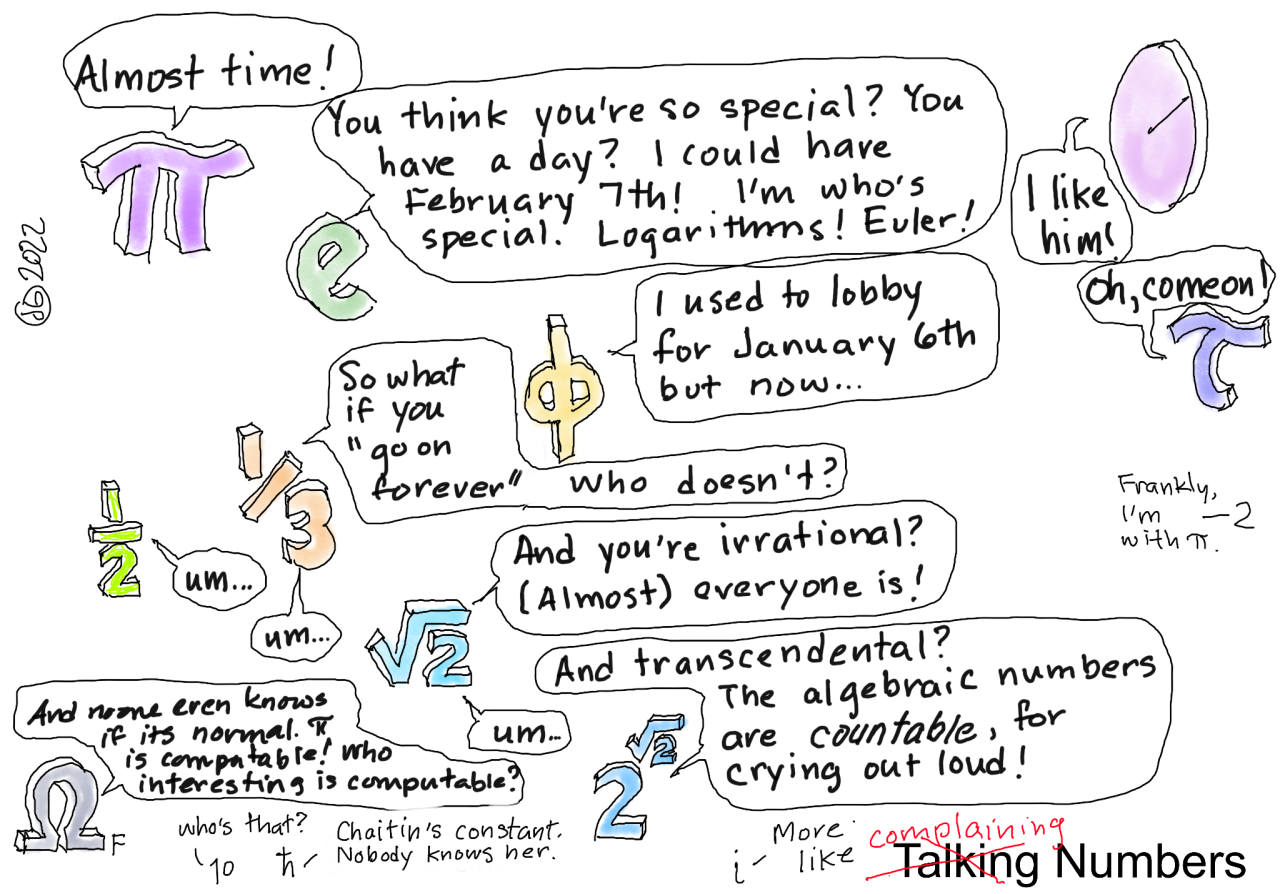
https://talkingnumbers.tumblr.com/post/677995936069320704/pi-me-a-river
We have another blog up next from Gianluigi Filippelli on the various infinite series that lead to pi . This time it examines the historical development of expressions for ( \dfrac{\pi}{2} ) and ( \dfrac{2}{\pi} ) Not surprisingly infinite series again are at the heart of all this. (Series are fundamental would be my personal take away this year)
http://docmadhattan.fieldofscience.com/2022/03/pi-day-viete-infinite-series.html
Penultimately, I’m including one slightly older video that I also watched that ties back into the previous one on Shank’s method. Here the Mathologer, Burkard Polster, goes through another well animated proof of pi’s irrationality. And once again the arctangent plays a prominent role. The background material led me to a long digression down the derivation of the Arctangent Taylor Series and then trying out converting it by hand into a continued fraction. Watch this one in a pair with Matt Parker’s one.
Rounding things out is this performance piece / poem from Harry Baker.
I wrote a poem about circles for #PiDay then I put on my fave circle t-shirt and filmed it walking around in a big circle. Enjoy x pic.twitter.com/jzxwEOBZKv
— Harry Baker (@harrybakerpoet) March 14, 2022
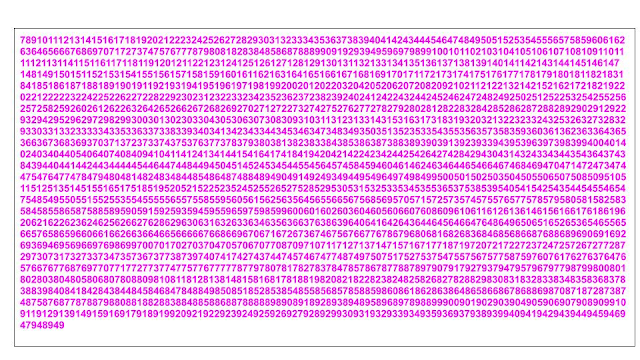
Prime Number of the Day - Danesh Forouhari
All the Rest Of Mathematics
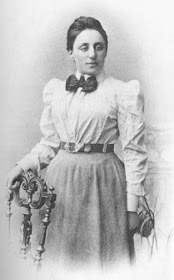
And now for something completely different … First up is a lovely post on Noether’s Therorem by Gianluigi Filippelli: http://docmadhattan.fieldofscience.com/2022/03/noethers-theorem.html On my bucket list is to someday go back and really understand Lie groups.
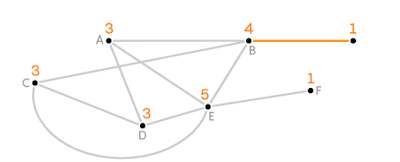
Patrick Honner has a new article up on Quanta Magazine:
https://www.quantamagazine.org/what-a-math-party-game-tells-us-about-graph-theory-20220324/
Exploring the hand shaking problem and graph theory. This is one is accessible and comes with some great exercises at the end to play around with.
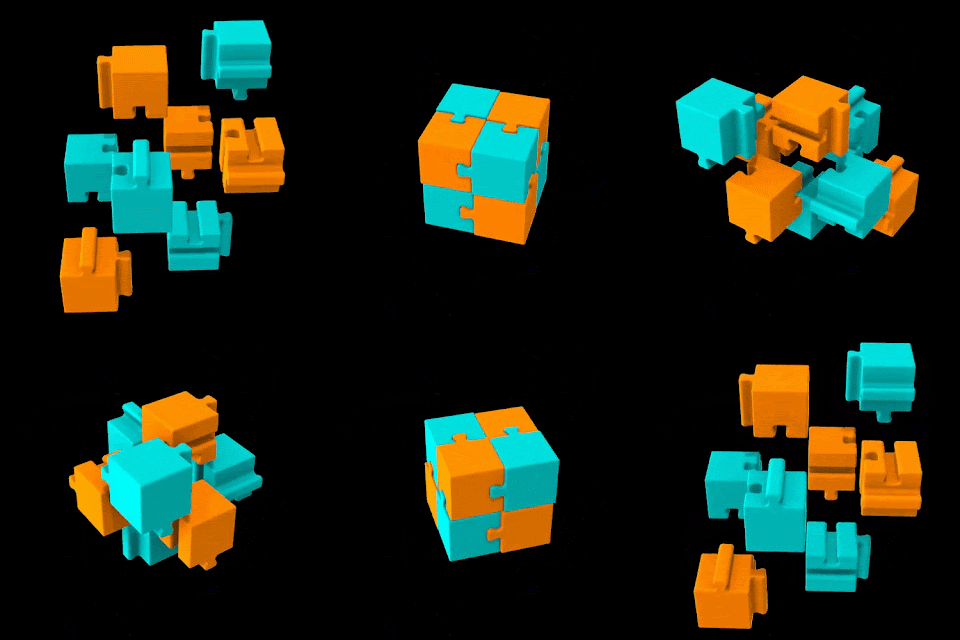
Daniel Piker - Cubes
On a related topic Tivadar Danka offered this fascinating thread on Twitter on the intesection between graph theory and linear algebra which I had never seen before and found really cool.
The single most undervalued fact of linear algebra: matrices are graphs, and graphs are matrices.
Encoding matrices as graphs is a cheat code, making complex behavior simple to study.
Let me show you how! pic.twitter.com/8rBIkA8ZbZ
— Tivadar Danka 🇺🇦 (@TivadarDanka) March 11, 2022
Here’s another more metaphysical podcast from Tattva Deep from one of their podcasts recently:
” In this short video, we share some common and some not-so-common questions that each of them answered. All our guests seemed to possess a unique way of looking at maths and understanding what it might be about. And it changed the way we looked at maths and broadened our perception of it. We hope you derived pleasure and insights from these conversations as well. We’d love to hear what you have to say. together several interesting answers from their conversations about maths.”
Link: https://www.youtube.com/watch?v=OYp-HXEFsdg
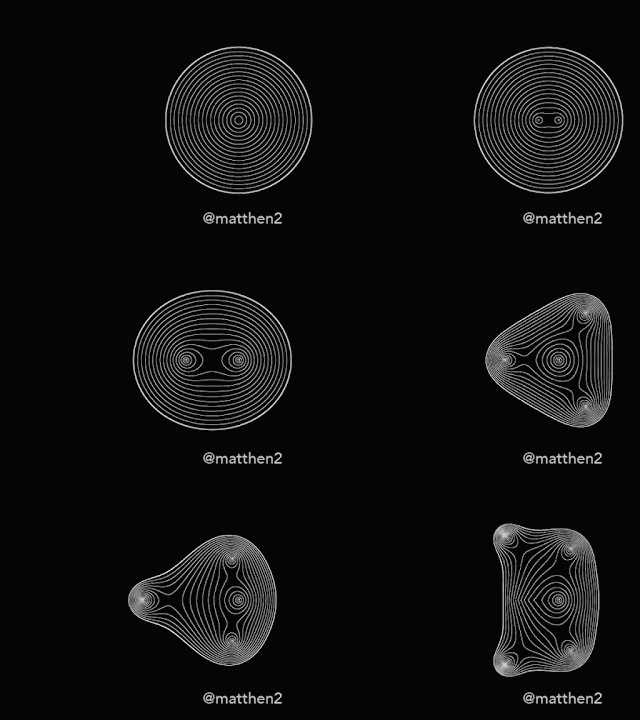
Matt Henderson - Mandelbrot Set
Cameron Son writes this contemplative piece about his numeric visualization process:
“When doing any sort of mental arithmetic or visualization of quantities, I picture numbers as shapes. In my head, operations like addition and subtraction manifest themselves as physical interaction between these shapes, and are complete with sounds and tactile feelings.”
http://www.csun.io/2022/03/03/how-i-see-numbers.html
And in our final entry for the month we have another well done video this time on Artificial Intelligence and pure mathematics.
“The usefulness of machine learning (ML) in pure mathematics is still the subject of much scepticism. However, a collaboration between representation theorist Geordie Williamson (University of Sydney) and AI lab DeepMind shows that ML algorithms can do more than just analyse large data sets. Geordie used DeepMind’s AI to suggest a possible line of attack on a 40-year-old conjecture about Kazhdan-Lusztig polynomials (the results were published in Nature in November 2021). In this video by the Sydney Mathematical Research Institute (SMRI), Geordie explains how AI can help with the intuitive elements of pure mathematics.”
Thanks again for reading. As usual the process of preparing this write up led me down so many interesting mathematical rabbit holes.