Properly fitting Problems
What motivated this essay was two posts I recently saw. The first started with the idea that no student should take more than five minutes on a problem. If stuck it was unlikely to be productive and they should just move on. In case, there was any confusion this expanded to the idea that investigations or inquiry based learning was ineffective. Secondly, was a note from an acquaintance about how he was about to start a class for pre-service teachers about the pedagogy of problems in the classroom which piqued my interest about which problems he would be using. Together these readings motivated me to think again about “Where do mathematical problems fit?” 
To start though you have to step back and define the problem. The classic “word problems” of elementary school are generally a misnomer. Students typically (but there are exceptions) know all the operational procedures to solve them and are being asked to practice translating from natural language into mathematical statements. Instead, I’m fond of the dichotomy between an exercise versus a problem. An exercise is a mathematical task that one knows how to do or has seen demonstrated and is aimed at practicing a skill or procedure in the service of mastery. On the other hand, a problem is a mathematical task where the solution is unknown at the start and one must reason how to solve it along the way. Importantly, this distinction is relative to the practitioner. What may be an exercise for me, can be a problem for someone else or vice versa depending on what prior knowledge we each have. That also means problems exist at every grade level but because they reflect where the solver is, have almost infinitely different and evolving forms. For me, problems are also central to learning mathematics. Skills like basic arithmetic are important in of themselves but also are only stepping stones and tools towards the service of mathematical exploration and understanding. This creates some difficult tensions though. Especially when beginning what is the proper balance between mastering skills and thinking about unsolved questions? Channeling the first author, the answer would be initially its mostly useless to try problems, the learner doesn’t have enough prior knowledge and domain experience. Problems just waste time and more seriously are ineffective for knowledge acquisition. In other words, even when one solves one, the process is not well synthesized. There’s usually some discussion of how experts approach problems differently but not much discussion of how or when one reaches that state (other than usually the impression its postsecondary at least)
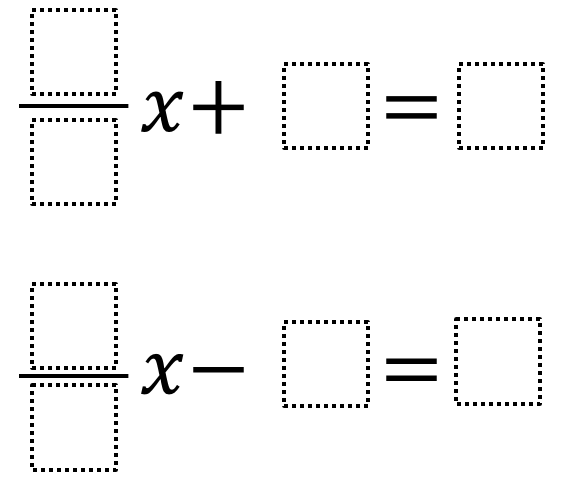 On the other hand, there are plenty of Inquiry Based Learning advocates that are all in with problems on a daily basis. Its easy to find a class vignette with everyone standing around whiteboards working on some communal task that will take a class period. All of which seems delightful but then the sneaking suspicions enter about the amount of mathematical ground being covered or if enough practice is occurring for growth to occur. After seeing yet another task involving rearranging the digits 1-10 to fit into some equations I often end up thinking how its very easy to idle in the domain of pre-algebra and never really get anywhere. Instead, I inhabit a middle ground. Time is limited but its important to constantly encounter problems through school in the service of developing patterns of thinking. At the same time, there needs to be a large amount of exercises along the way or you flounder without ever mastering concepts confidently enough to utilize them later. That’s a very tricky space given the constraints. So I think you always have to be strategic in what you choose not only in how to to balance the hours between longer problems and practice exercises but what forms each take. To keep to the flow, the problems should riff on the concepts being worked on in an exercise or require one to practice a skill in the service of the solution so you are getting double duty out of it. They should also advance the arc of the subject being explored. That’s constraining in the sense there are plenty of interesting non-curricular tasks one could do but only a subset align well with the overall goals for a class. Like many artforms though within those limits there still is tremendous opportunity for creativity and interesting experiences. Example: I’m going to draw from my own experience doing math circle activities where I’m very purposely fairly random about activities because we exist outside the curriculum. But I often run into things that would work really well in a classroom setting paired with a learning goal. Recently we tried out determining the number of rectangles that could be fit in one larger one.
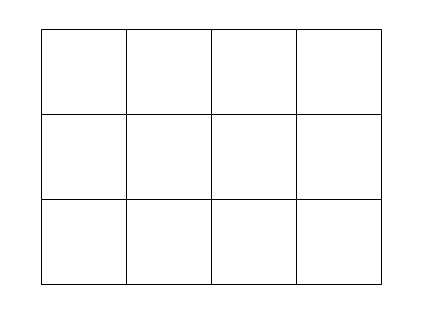 There are 60 sub rectangles in the above 3x5 The process for exploring this was fairly messy and time consuming and involved a lot of counting strategies and looking for patterns. But the ultimate solution has deep connections to combinatorics and would work really well embedded in a unit on combinations, pascal’s triangle (or both). If doing so you’d want to combine it with simpler exercises on calculating combinations and using their properties along with other simpler problems that built towards being able to tackle this one. Creating, integrating and curating these tasks is the crux of the instructor “problem”. Its easy to go a little astray and end up with a problem that falls flat and no one can solve or is too easy or fails to make the crucial connection or is boring. The chance for failure is fairly large. But practice helps and keeping one’s eye on this ultimate goal and reflecting on how each attempt at problem integration into a sessions plays out aids in more effectively using them. And to return to my central philosophy, problems are too essential to Mathematics to not keep tilting at figuring out how to properly use them.
